jl99 app login Probability in Casino Games
Mastering Probability in Casino Games with jl99 app login
Welcome to the exciting world of online casino gaming! If you're new to the scene, understanding the basics of probability can significantly enhance your gaming experience and strategy. This beginner's guide will demystify the concept of probability as it applies to popular casino games, helping you make more informed decisions and potentially improve your odds. With jl99 app login, you'll discover a world of thrilling games from top providers like JDB Gaming, JILI Games, and Play’n GO, all optimized for a seamless mobile-first experience in the PH Market. Whether you're spinning slots, hitting the blackjack table, or betting on roulette, a grasp of probability is your secret weapon. We'll cover everything from theoretical probability to practical tips, ensuring you're well-equipped to navigate the vibrant landscape of online gaming. So, let's dive in and unlock the secrets behind the numbers!
What is Probability in Casino Games?
At its core, probability is the mathematical chance of an event occurring. In the context of casino games, it's about understanding the likelihood of specific outcomes, such as hitting a jackpot on a slot machine, getting a certain card in blackjack, or a particular number landing on a roulette wheel. Probability is expressed as a number between 0 and 1, or as a percentage between 0% and 100%. A probability of 0 means an event is impossible, while a probability of 1 (or 100%) means it's certain to happen.
There are two main types of probability you'll encounter:
- Theoretical Probability: This is based on mathematical calculations and what should happen in an ideal scenario. For example, the theoretical probability of rolling a 6 on a fair six-sided die is 1/6, because there's one favorable outcome (rolling a 6) out of six possible outcomes.
- Empirical Probability: Also known as experimental probability, this is based on observations from actual events. If you roll a die 100 times and a 6 comes up 15 times, the empirical probability of rolling a 6 is 15/100 or 15%. Over a very large number of trials, empirical probability tends to converge with theoretical probability.
Understanding these concepts is crucial because they form the foundation of how casino games are designed and how the house maintains its edge. Knowing the theoretical probabilities can help you make more logical choices, even though luck always plays a significant role in individual outcomes.
Understanding House Edge and RTP (Return to Player)
Two terms you'll frequently encounter in online casinos are 'House Edge' and 'Return to Player' (RTP). These are direct applications of probability that indicate the profitability of a game for both the casino and the player.
-
House Edge:
The house edge is the built-in advantage that the casino has over the players. It's expressed as a percentage and represents the average gross profit the casino expects to make from each bet over the long run. For example, if a game has a 2% house edge, it means that for every ₱100 wagered, the casino expects to keep ₱2 as profit, and ₱98 is returned to players in winnings. This edge ensures the casino's long-term profitability and allows them to offer a wide array of games from providers like JDB Gaming and JILI Games.
Different games have different house edges. Blackjack, when played with optimal strategy, can have a very low house edge (sometimes less than 1%), while Keno might have a house edge of 20% or more. Knowing the house edge can guide you towards games that offer better theoretical chances of winning.
-
Return to Player (RTP):
RTP is essentially the inverse of the house edge, usually applied to slot games. It's the percentage of all wagered money that a slot machine or casino game will pay back to players over time. For instance, a slot game with an RTP of 96% means that, on average, for every ₱100 wagered, the game will return ₱96 to players as winnings, keeping ₱4 as the house's profit (which corresponds to a 4% house edge). Higher RTP percentages are generally more favorable for players.
When you're exploring the extensive library of games available after your jl99 app login, always look for games with a higher RTP if you're aiming for better long-term returns. Many reputable gaming providers like Play’n GO openly publish the RTP for their games, offering transparency to players in the PH Market.
Probability in Popular Casino Games
Let's explore how probability manifests in some of the most popular casino games you'll find on mobile-first platforms like jl99 app login.
-
Slot Machines:
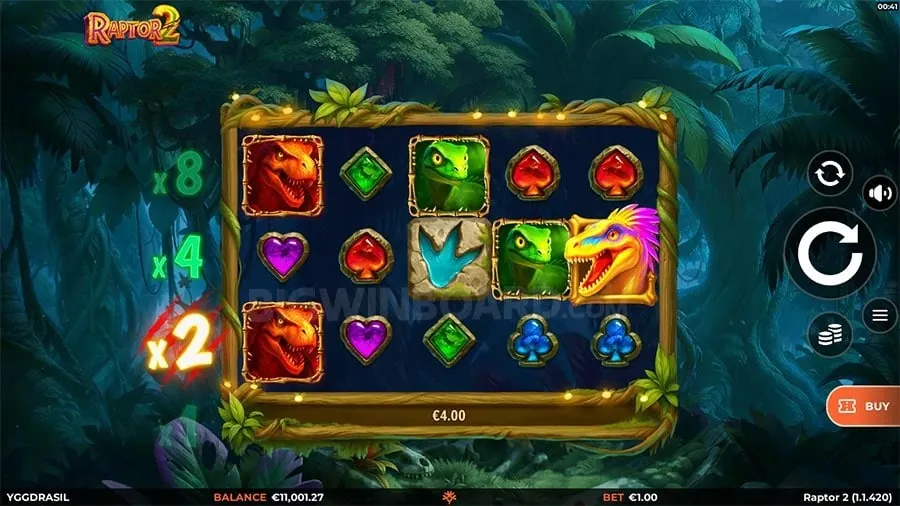
Slots are perhaps the most popular casino games, known for their simplicity and exciting potential for big wins. The probability of hitting a specific winning combination on a slot machine is determined by a Random Number Generator (RNG). Each spin is an independent event, meaning the outcome of previous spins does not influence future ones. While you can't predict the outcome, the RTP percentage gives you an idea of the game's long-term payout. Games from providers like JILI Games and Wolf Gaming often feature diverse themes and varying RTPs.
Tip: Always check the RTP of a slot game before playing. Higher RTP slots (e.g., 96% or more) generally offer better value over extended play.
-
Blackjack:
Blackjack is a card game where skill and strategy significantly influence the outcome, making probability a key factor. The goal is to have a hand value closer to 21 than the dealer, without exceeding 21. The probability of getting certain cards (e.g., an Ace, a 10-value card) changes with each card dealt from the shoe. Basic strategy in blackjack is based entirely on probability, telling you the statistically best action to take (hit, stand, double down, split) for every possible hand combination against the dealer's upcard. Following basic strategy can reduce the house edge to less than 1%.
Tip: Learn and apply basic blackjack strategy. It's not about counting cards, but about making mathematically sound decisions based on probabilities.
-
Roulette:
Roulette is a game of pure chance, but understanding the probabilities of different bets can help you manage your expectations. In European Roulette, there are 37 pockets (1-36 and a single 0), while American Roulette has 38 pockets (1-36, 0, and 00). The single 0 in European Roulette gives it a lower house edge (2.7%) compared to American Roulette (5.26%) due to the extra 00 pocket.
The probability of hitting a single number in European Roulette is 1/37. The probability of an 'even money' bet (like red/black, odd/even, high/low) is nearly 50% (18/37). Knowing these odds can help you choose bets that align with your risk tolerance.
Tip: Always prefer European Roulette over American Roulette if available, as it offers better odds due to the single zero.
Strategies, Tips, and Common Misconceptions
While probability dictates the long-term outcomes, there are strategies and important points to consider when gaming online, especially through a mobile-first platform like jl99 app login.
-
Bankroll Management:
This is perhaps the most crucial strategy. Set a budget for your gaming sessions and stick to it. Never chase losses. Understanding probability means knowing that even with the best odds, short-term outcomes are unpredictable. Responsible bankroll management ensures that you can enjoy the games without financial strain.
-
Understanding Volatility/Variance:
In slot games, volatility (or variance) refers to the risk level. High volatility slots offer bigger, less frequent wins, while low volatility slots offer smaller, more frequent wins. This isn't about probability changing, but about how winnings are distributed. Choose slots that match your playing style and bankroll size.
-
Common Misconceptions:
- Gambler's Fallacy: This is the mistaken belief that if an event has occurred more frequently than normal in the past, it is less likely to happen in the future, or vice versa. For example, if a roulette ball has landed on red five times in a row, some might believe it's 'due' to land on black. However, each spin is an independent event, and the probability of landing on red or black remains the same.